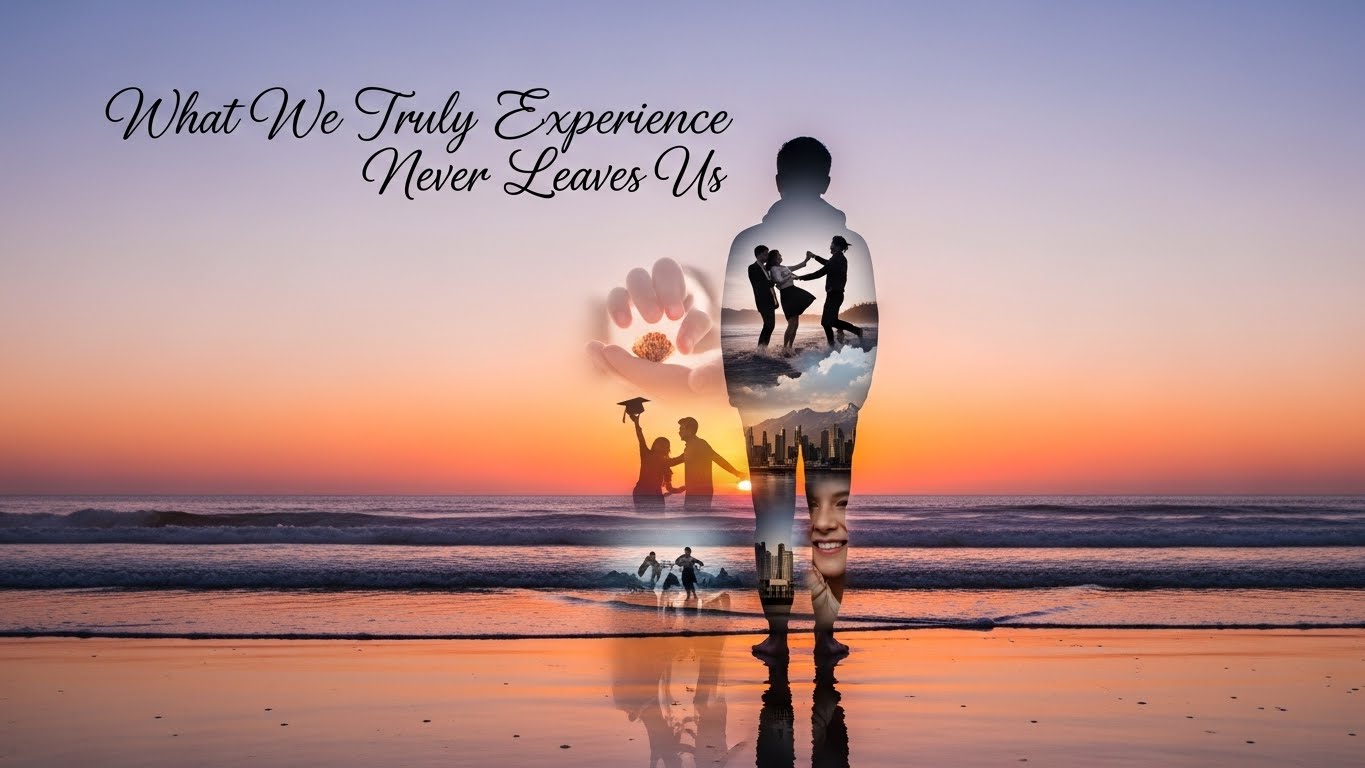
The idea that what we once enjoyed can never be lost, and that what we love deeply becomes part of us, is not sentimental language. It describes how human experience is stored, carried, and expressed over time.
This article explains what that really means.
The Core Idea Explained Simply
Experiences do not disappear when they end.
They become:
• Reference points
• Emotional memory
• Internal standards
Even when people, moments, or phases pass, their impact remains embedded in how we think, feel, and respond.
How Enjoyment Turns Into Permanence
Enjoyment creates emotional imprinting.
When something is deeply enjoyed or loved:
• The brain records the pattern
• The body remembers the feeling
• The mind adjusts expectations
That imprint influences future choices, values, and reactions.
Loss Does Not Erase Meaning

Losing access to something is not the same as losing its effect.
A relationship may end.
A moment may pass.
A phase may close.
But what it shaped inside you remains active.
A Practical Example
Someone who once experienced genuine kindness will:
• Recognize it faster later
• Seek it again
• Be less willing to accept cruelty
The experience becomes a filter, not a memory alone.
Why This Matters
People often fear loss as total erasure.
In reality:
• Experience becomes internal structure
• Love becomes part of personal identity
• Meaning compounds over time
Understanding this reframes loss as transformation, not deletion.
What InsightBridgeHub Clarifies
This idea is not about clinging to the past.
It explains:
• How identity accumulates
• Why experiences shape future behavior
• How meaning survives change
The Takeaway
What you deeply experience does not leave you.
It becomes part of how you see, choose, and exist.
Nothing meaningful is ever truly lost.