The statement Imagination will often carry us to worlds that never were, but without… is incomplete by design. Its meaning becomes clear when we examine what imagination can do alone—and what it cannot.
This article explains the missing half plainly.
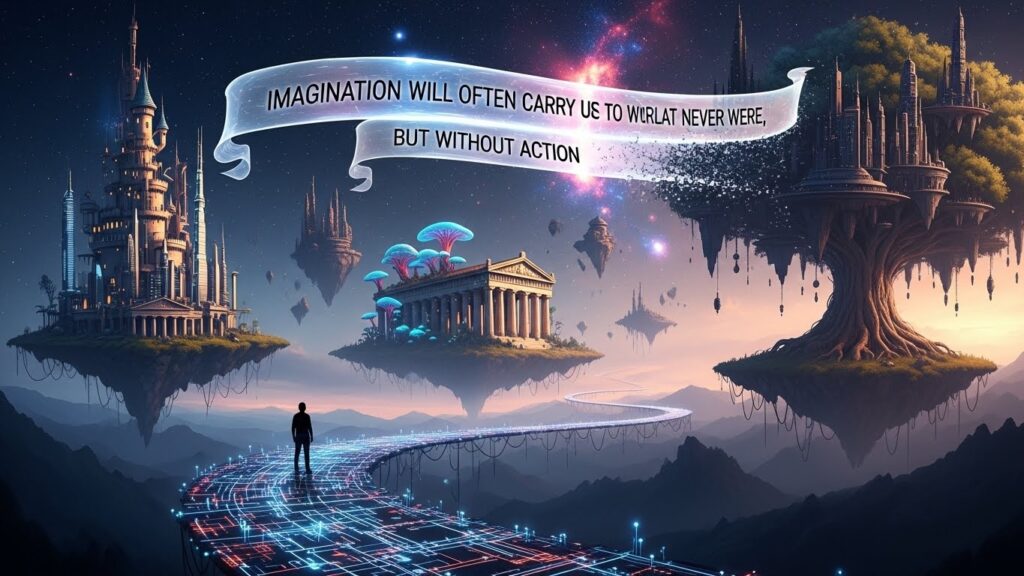
The Core Idea Explained Simply
Imagination is powerful, but incomplete.
It can:
• Create possibilities
• Envision alternatives
• Inspire ideas
But imagination alone does not produce outcomes.
Without grounding in action, reality, or discipline, imagination stays theoretical.
What Imagination Does Well
Imagination excels at expansion.
It allows us to:
• Picture better futures
• Escape present limitations
• Generate creativity
This is essential. Progress always begins with imagination.
Where Imagination Falls Short
Imagination does not automatically lead to change.


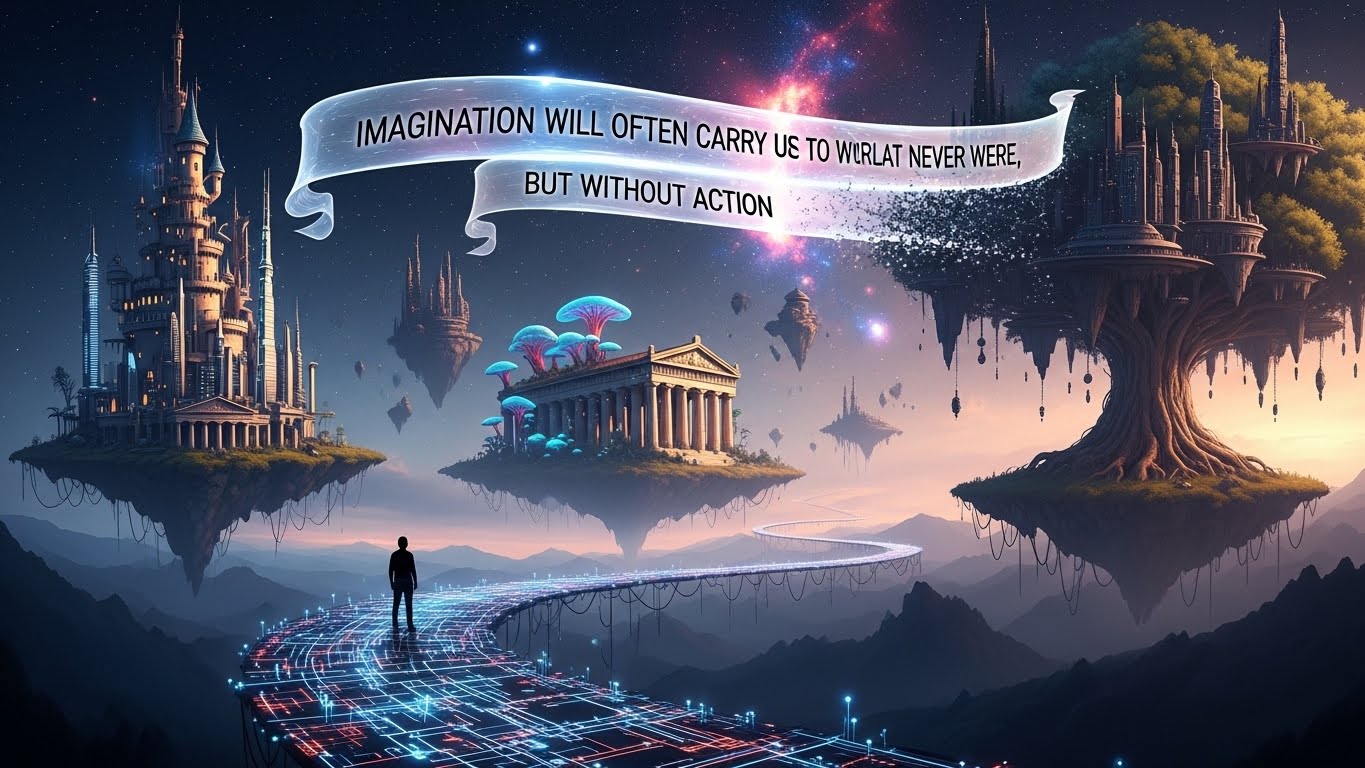

Without:
• Action
• Structure
• Effort
• Constraints
Imagined worlds remain mental spaces, not lived ones.
A Simple Example
Someone imagines a better career.
Imagination creates clarity about desire.
Action determines whether that desire becomes real.
Without action:
The imagined world exists only in thought.
Why This Matters
People often confuse imagination with progress.
This leads to:
• Endless planning
• Repeated visualization
• Minimal execution
Understanding the difference prevents stagnation.
What InsightBridgeHub Clarifies
The incomplete statement points to a balance.
Imagination is the map.
Action is the movement.
One without the other creates either:
• Direction without progress
• Motion without purpose
Both are necessary.
The Takeaway
Imagination can take you anywhere.
But without action, structure, or discipline, it cannot take you forward.
Worlds imagined must be built to be lived.