Prediction markets are online platforms where people place bets on the outcomes of future events — from elections to economic indicators to geopolitical events. Examples include Polymarket and Kalshi, both of which operate in different legal and regulatory environments in the U.S. and abroad. Wikipedia+1
This article explains how these markets function, what regulators are doing, and why a recent high-profile bet on Venezuela’s president has raised questions about fairness and oversight.
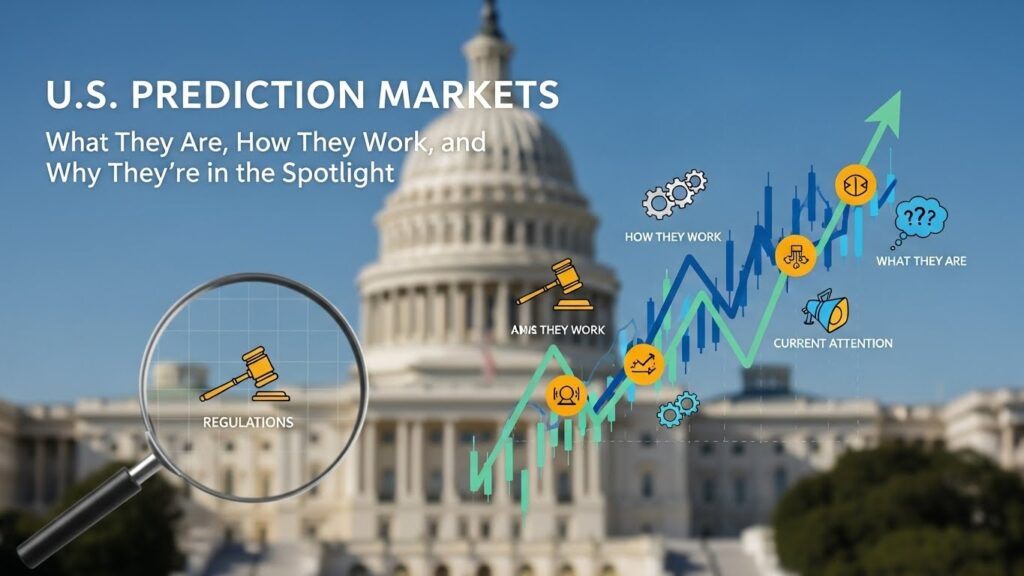
What Prediction Markets Actually Are
A prediction market lets users trade contracts tied to real-world outcomes. If you bet that an event will happen, you profit if it does; you lose if it doesn’t. Markets set implied probabilities based on aggregated bets. Wikipedia
Key points to understand:
• Bets are not against the house but against other market participants. Wikipedia
• Outcomes determine payoffs, not the amounts wagered alone. Wikipedia
• Platforms vary in regulation and legal status. Wikipedia
Polymarket historically used cryptocurrency and was once blocked from U.S. users; it later achieved compliance with the Commodity Futures Trading Commission (CFTC), the federal regulator responsible for certain derivatives. Wikipedia
Kalshi, another U.S.-based site, won court approval to offer political event contracts, including election betting, after a legal battle with the CFTC. Wikipedia
The Recent High-Profile Venezuela Bet
In early January 2026, an anonymous Polymarket account placed large bets predicting that Venezuelan President Nicolás Maduro would be removed from power by month’s end. When the U.S. military confirmed his capture, the bets paid out — reportedly earning the trader hundreds of thousands of dollars on an initial investment of tens of thousands. CBS News+1


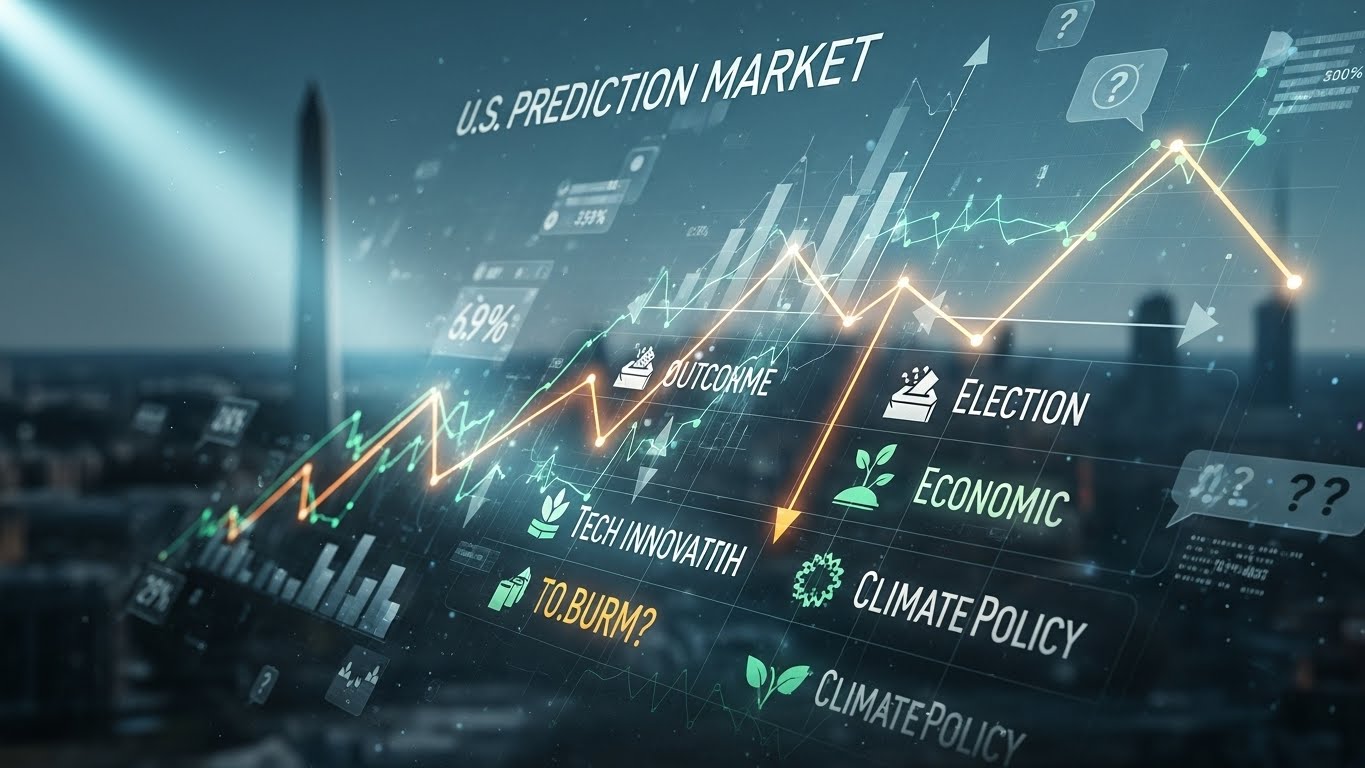
This raised several questions:
• Was the trader simply well-informed or lucky? Yahoo Finance
• Did they have access to insider information? 90.5 WESA
• Are these markets susceptible to manipulation? Axios
This type of outcome — big profits tied to sensitive political events — has highlighted gaps in oversight and potential risks of insider trading. Polymarket and Kalshi both have rules against market abuse, but enforcement and transparency vary. 90.5 WESA
What Lawmakers and Regulators Are Saying
Recent events have prompted U.S. lawmakers to consider new rules. Representative Ritchie Torres introduced the Public Integrity in Financial Prediction Markets Act of 2026, which would make it unlawful for government officials or covered individuals to trade on material non-public information in prediction markets. iGB+1
The bill targets insider trading risk — when someone profits from information the public doesn’t have. But even supporters acknowledge enforcement could be difficult, given the pseudonymous nature of many accounts and limited regulatory resources. pokerscout.com
The CFTC already oversees regulated markets like Kalshi and has authority to enforce anti-fraud rules, but staffing and monitoring capabilities are limited compared with the Securities and Exchange Commission (SEC) that polices traditional financial markets. 90.5 WESA
Some experts worry that ties between major platforms and political figures — including advisory roles or investment connections — may complicate unbiased regulation. 90.5 WESA
Why This Matters
Prediction markets are now more mainstream and connected to real-world decision making. They attract institutional investment, generate large trading volumes, and sometimes influence public perception of event likelihoods. Business Insider
However:
• Lack of clear regulatory guardrails can undermine trust. 90.5 WESA
• Insider trading risk could erode fairness — just as in stock markets. iGB
• Platforms’ definitions of outcomes (e.g., what counts as an “invasion”) can alter payout decisions, sparking legal and ethical debate. The Guardian
InsightBridgeHub’s Simplified View
Prediction markets offer real-time opinion aggregation and risk management potential, but they also expose gaps in oversight and accountability.
They sit at the intersection of finance, technology, and geopolitics — a space where clarity about information access and regulation is essential.
Understanding how these platforms work, who regulates them, and why recent outcomes have drawn scrutiny helps separate hype from real structural risk.