The statement As long as poverty, injustice, and gross inequality persist in our world is often used in speeches and moral appeals. Stripped of rhetoric, it describes a structural reality that affects stability, opportunity, and human behavior.
This article explains that reality plainly.
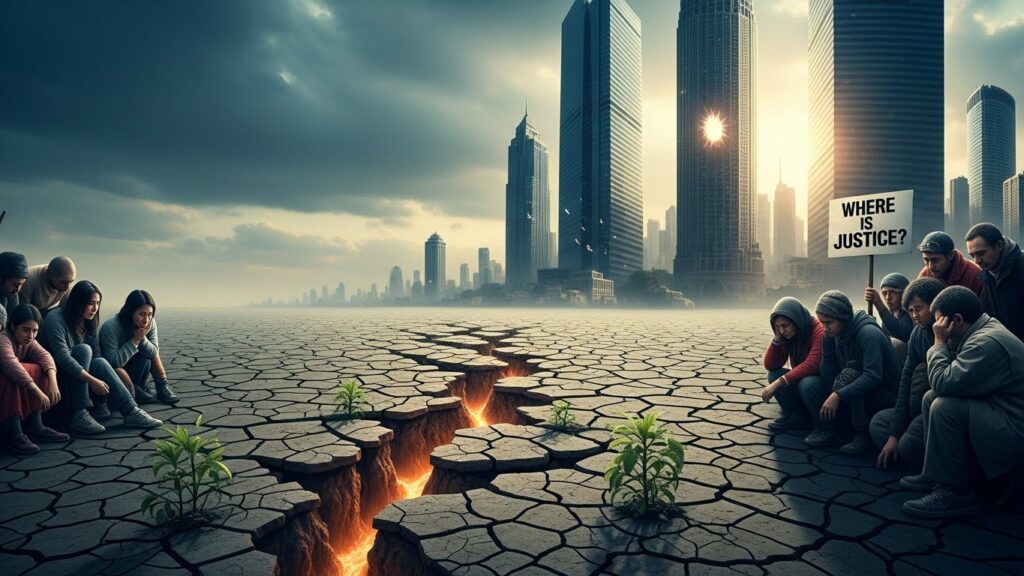
The Core Idea Explained Simply
Poverty, injustice, and inequality are not isolated problems.
They are connected systems that reinforce each other:
• Poverty limits opportunity
• Injustice blocks fair access
• Inequality concentrates power and resources
When one persists, the others are sustained.
Why These Issues Do Not Stay Local
These conditions do not remain confined to one group or region.
They influence:
• Economic instability
• Social unrest
• Migration pressures
• Political polarization
What seems distant eventually affects everyone.
A Simple Example


When large groups lack access to:
• Education
• Fair wages
• Legal protection
The result is not only hardship for them, but weakened systems for all.
Inequality reduces trust.
Reduced trust weakens cooperation.
Weakened cooperation destabilizes societies.
Why Progress Feels Slow
These problems persist because they are structural, not accidental.
They are embedded in:
• Economic systems
• Political decisions
• Historical patterns
Short-term solutions treat symptoms.
Long-term change requires systemic adjustment.
What InsightBridgeHub Clarifies
This idea is not moral posturing.
It explains:
• Why global problems repeat
• Why inequality fuels instability
• Why fairness is not just ethical, but practical
Addressing these issues is about system health, not charity.
The Takeaway
As long as poverty, injustice, and inequality exist, their effects will ripple outward.
Stability, progress, and shared prosperity depend on reducing them—not ignoring them.
Clarity begins with understanding the system, not blaming individuals.